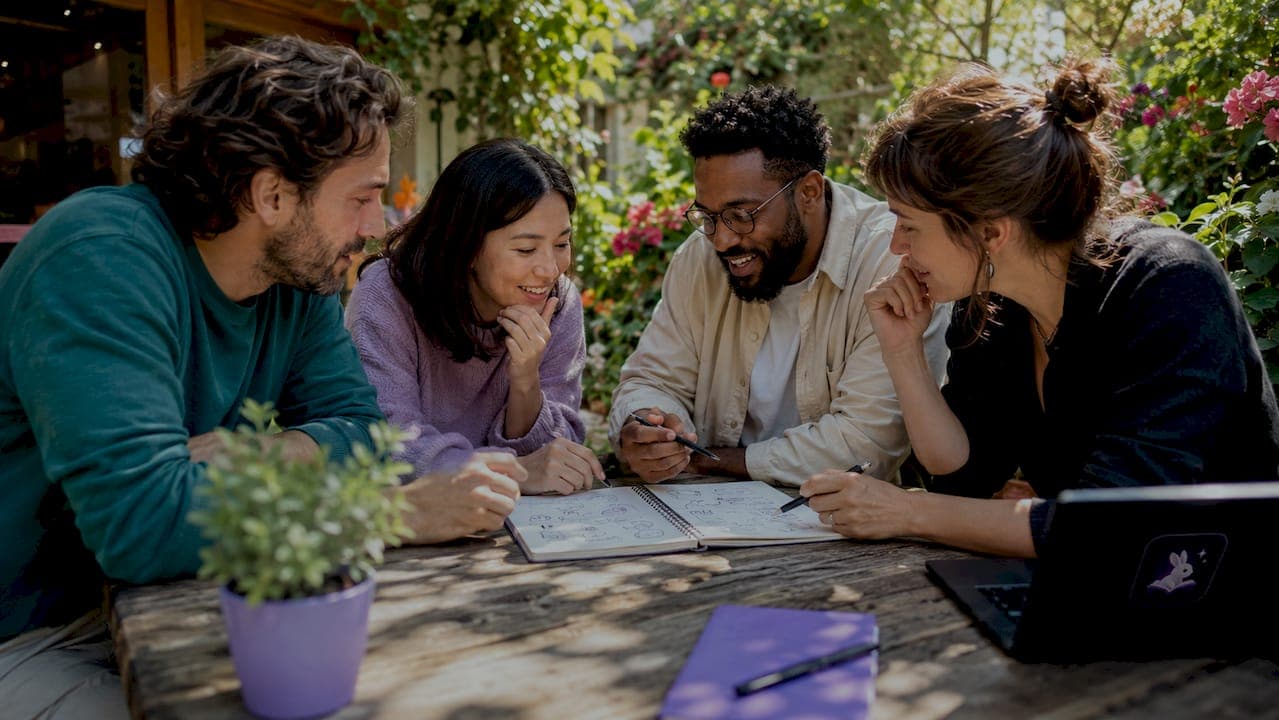
Community-driven content is the co-created, participatory material that empowers groups to collectively shape creativity through authentic interaction and shared ideas. Understanding how community-driven content shapes creativity is no longer optional for serious creative professionals. Collaborative knowledge-sharing integrates specialized expertise and sparks diverse innovation, particularly under pressure. Communities do not just consume ideas. They generate, test, and refine them in real time, making collective participation the engine of modern creative output.
How community-driven content shapes creativity through collaboration
Creativity is rarely a solo act. Collaborative interactions produce ideas that evolve through feedback and transformative exchange, not through isolated bursts of inspiration. The most durable creative breakthroughs come from people building on each other's thinking.
Knowledge sharing is the core mechanism here. When creators with different skills and backgrounds work together, they bring perspectives that no single person holds. A writer who collaborates with a visual artist and a data analyst produces work that none of them could have made alone. This cross-pollination is not accidental. It is the direct result of community structures that make knowledge flow visible and accessible.

Community-driven learning is also bottom-up by nature. It does not follow a curriculum. It follows curiosity. Peers teach peers, questions surface organically, and the group collectively decides what matters. This model produces faster, more contextually relevant learning than top-down instruction.
Here is what effective creative collaboration looks like in practice:
- Peer critique sessions where creators share unfinished work and receive structured feedback
- Cross-discipline threads in online forums that connect writers, designers, and developers around shared problems
- Open contribution models where community members tag, annotate, and expand on each other's ideas
- Rotating leadership in group projects that gives different voices creative authority at different stages
Pro Tip: When joining a new creative community, contribute before you ask. Answer three questions or offer one piece of feedback before posting your own request. This builds credibility fast and signals genuine participation.
The impact of community content on individual creativity compounds over time. Each interaction adds to a creator's mental library of approaches, references, and techniques. The community becomes a living resource that grows richer the more people contribute to it.
What is the hive mind effect in creative communities?
The hive mind is not a metaphor for groupthink. It describes the emergent intelligence that arises when many individuals contribute small, distinct inputs that combine into something none of them planned. Creativity functions as emergent field-level intelligence, balancing normative stabilization with exploratory deviations. Communities act as regulators, deciding which innovations persist and which fade.
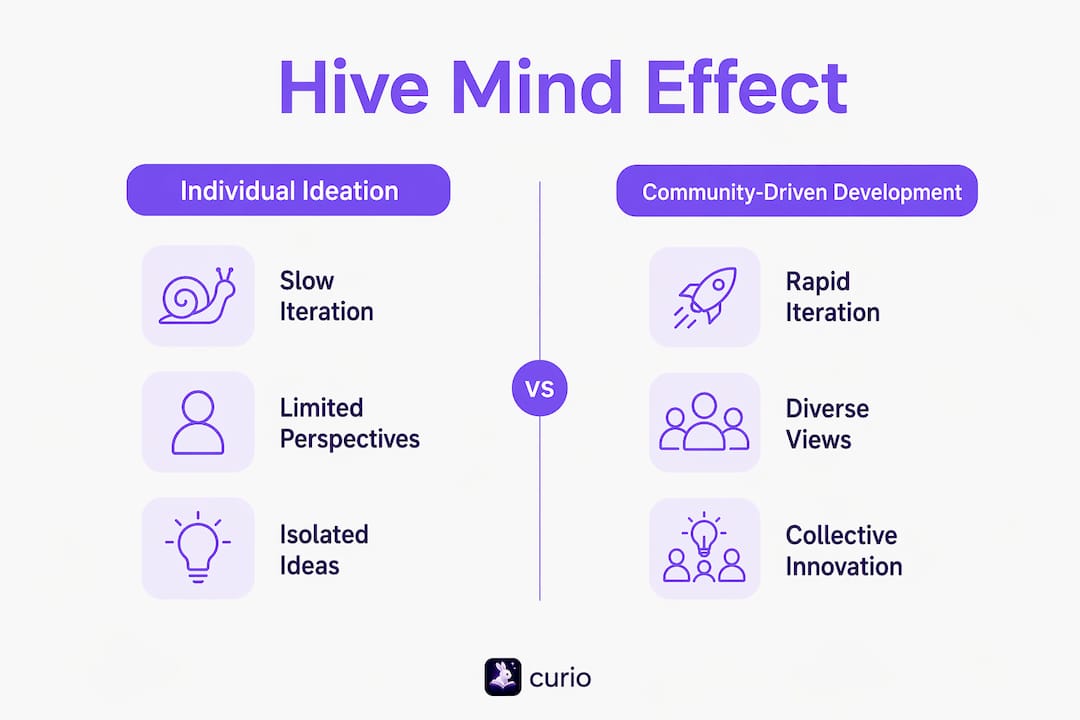
This dynamic shows up clearly in how creative trends evolve online. A single image format, writing style, or musical motif gets remixed hundreds of times. Each iteration adds a small variation. Over weeks, the original idea transforms into something entirely new, shaped by collective input rather than a single author's vision.
Editorial curation and moderation play a critical role in this process. Without structure, community creativity collapses into noise. With too much structure, it stagnates. The best creative communities maintain a productive tension between freedom and constraint.
| Dimension | Individual ideation | Community-driven development |
|---|---|---|
| Speed of iteration | Slow, limited by one person's bandwidth | Fast, parallel contributions accelerate cycles |
| Diversity of input | Narrow, shaped by personal experience | Wide, draws from many backgrounds and skills |
| Error correction | Self-review, prone to blind spots | Peer review catches gaps quickly |
| Longevity of ideas | Depends on one creator's sustained effort | Distributed ownership sustains momentum |
| Risk tolerance | Often cautious without external validation | Community feedback lowers the cost of experimentation |
Communities' shared ethics and empathy govern which new creative ideas get accepted or rejected. This is not censorship. It is the natural selection of ideas at scale. The hive mind does not elevate every idea equally. It amplifies the ones that resonate, challenge, or solve a real problem.
How do social platforms shape creative expression and AI literacy?
Social platforms are now the primary infrastructure for community-driven creativity. User-generated content represents about 20% of all AI citation volume in 2026, with Reddit providing 21% and YouTube 18.8% of total AI citation volume across social platforms. That number signals something important: the ideas that communities generate and debate are shaping how AI systems understand the world.
Reddit's structure is particularly effective at producing citable, authoritative content. Genuine, expertise-led answers on Reddit generate community-validated authority that AI systems favor for months after posting. The karma system rewards quality over volume. This creates a natural filter that elevates the most useful creative thinking.
AI literacy among creators develops socially within online communities using bottom-up, peer-moderated workflows, not as an individual skill acquired in isolation. Communities use bot prompts and categorized posts to scaffold learning and ethical reflection. This means that understanding how to work with AI tools is itself a community-driven skill.
| Platform type | Primary creative function | Community content format |
|---|---|---|
| Long-form discussion forums | Deep peer critique and knowledge building | Threaded posts with upvoting |
| Video communities | Tutorial sharing and iterative remixing | Comments, responses, and reaction content |
| Real-time chat platforms | Rapid feedback and collaborative sprints | Channels organized by topic or project |
| Moderated reading communities | Curated story sharing and reflection | Structured submissions with editorial review |
Pro Tip: Authenticity outperforms volume on every platform. One detailed, honest answer to a specific creative question builds more lasting influence than ten generic posts. AI systems and human readers both reward depth.
The influence of shared ideas across platforms also creates feedback loops. A technique discussed in a Discord channel gets written up in a blog post, cited in a Reddit thread, and eventually referenced by AI tools answering questions about that technique. The community becomes the source of record.
How can creative professionals use community-driven content?
Creative professionals who treat community participation as a strategy, not a hobby, see compounding returns. Communities provide unpaid R&D labor through tagging, beta-reading, and reviewing that fuels innovation, often without formal compensation to contributors. Knowing this, smart creators build reciprocal relationships with their communities rather than extracting value without giving back.
Here is a practical framework for building creativity through community:
- Contribute before you curate. Spend the first month in any new community answering questions, sharing resources, and engaging with others' work. Credibility precedes influence.
- Use shared documents as creative infrastructure. Collaborative docs, annotated reading lists, and shared mood boards give a community a tangible creative artifact to build around.
- Scaffold group flow with structure. Active scaffolding and moderation synchronize real-time contributions and prevent creative chaos. Shared templates, coordinated check-ins, and dedicated channels each serve this function.
- Establish psychological safety early. Psychological safety allows teams to share unpolished ideas and grow through feedback. Without it, people share only finished work, and the community loses its generative power.
- Track what the community amplifies. Notice which ideas get remixed, questioned, or built upon. These signals tell you what the community finds genuinely useful or provocative.
Beyond these steps, creative professionals benefit from rotating between contributing and observing. Observation reveals patterns that active participation can obscure. You notice which formats generate the most engagement, which questions go unanswered, and where the community's knowledge gaps are. Those gaps are creative opportunities.
Building creativity through community also requires accepting that your ideas will be changed. The community will remix, critique, and sometimes reject what you offer. That process is not a threat to your creative vision. It is the mechanism through which your ideas become stronger and more widely relevant.
Key Takeaways
Community-driven content shapes creativity by turning individual ideas into collective innovations through structured collaboration, peer feedback, and shared knowledge.
| Point | Details |
|---|---|
| Collaboration mediates creativity | Knowledge sharing across diverse skills produces stronger creative output than solo work. |
| Hive mind dynamics amplify ideas | Communities filter and iterate on ideas at scale, accelerating creative evolution. |
| Social platforms drive AI literacy | Bottom-up peer learning on forums builds creative and technical skills simultaneously. |
| Scaffolding prevents creative chaos | Shared templates, moderation, and check-ins keep group flow productive and focused. |
| Psychological safety is non-negotiable | Teams share unpolished ideas and iterate faster when safety is established from the start. |
The uncomfortable truth about creative communities
I have spent years watching creative professionals treat community participation as a marketing channel. They post, they promote, and they wonder why nothing sticks. The communities that actually shape creativity operate on a different logic entirely.
The most generative creative communities I have observed are the ones where nobody is trying to win. People share half-formed ideas because they trust the group to help finish them. They ask questions that reveal ignorance because they know the community rewards honesty over performance. That dynamic does not happen by accident. It requires intentional leadership and a genuine commitment to psychological safety in creative teams.
The other thing most articles miss is the labor question. Communities supply foundational support through reviewing, tagging, and feedback infrastructure, often without any formal recognition. Creative professionals who benefit from this should find ways to give back, whether through mentorship, open-sourcing their process, or simply crediting the community publicly. Reciprocity is what keeps a creative community alive long enough to matter.
The shift from solitary to collaborative creativity is not a trend. It is a structural change in how ideas get made and validated. The creators who thrive are the ones who learn to work with that current, not against it.
— Noctilucente
Curio: where community ideas come alive
Reading is one of the most underrated ways to stay connected to the ideas your creative community is generating.
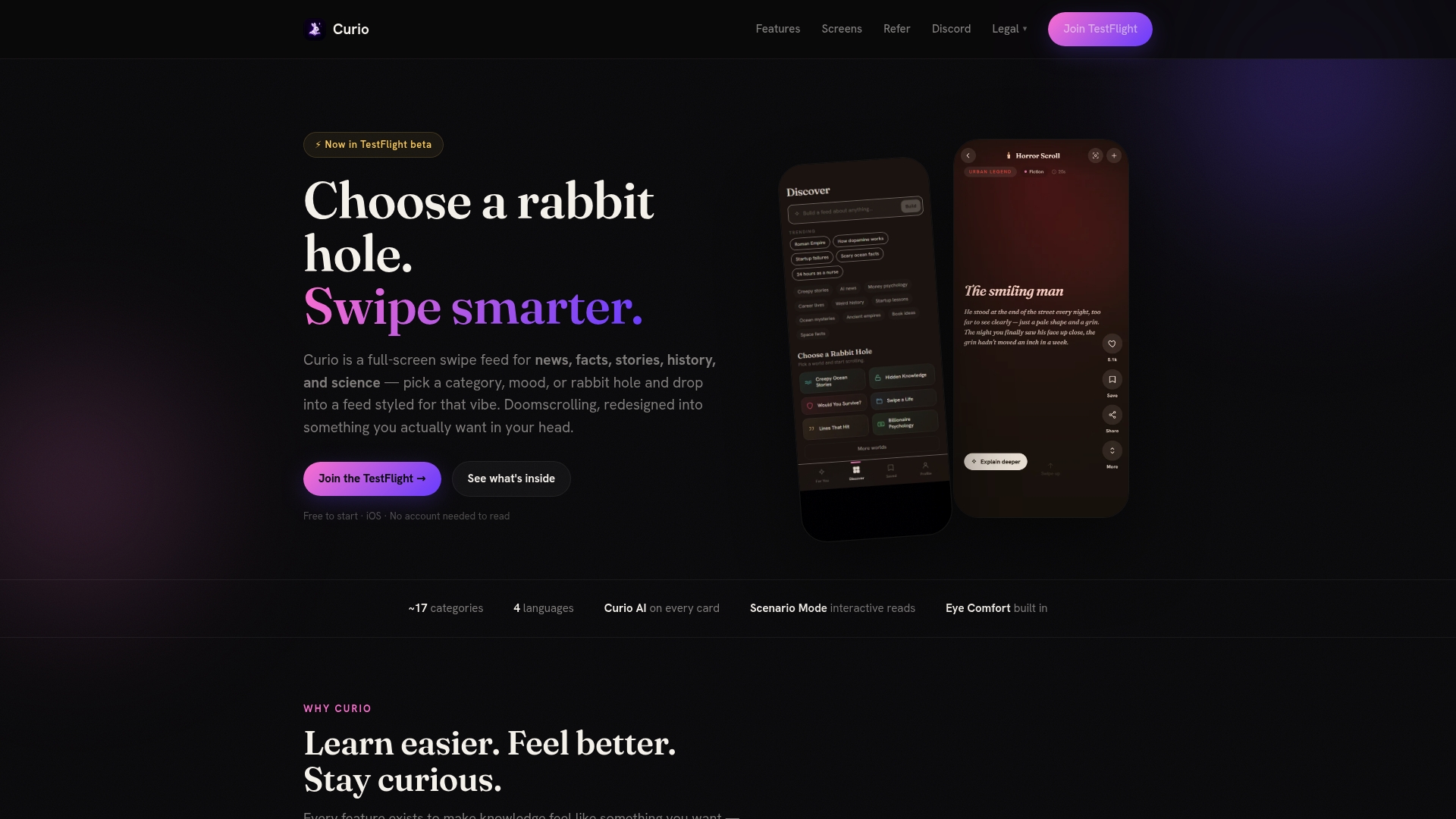
Curio is a distraction-free reading app built for people who want to go deep on the ideas that matter to them. It offers bite-sized content across topics, with AI tools that let you summarize, quiz yourself, or follow a rabbit hole further. Community-driven stories on Curio are moderated for quality and safety, so what you read reflects genuine insight rather than noise. The app's calming design keeps you focused, and gentle break reminders make longer sessions feel comfortable rather than draining. If you want to stay sharp on the ideas shaping your creative field, Curio gives you a focused space to do it. Learn more about content safety on Curio and how the platform keeps community content trustworthy.
FAQ
What is community-driven content in creative contexts?
Community-driven content is co-created material produced through authentic participation, peer feedback, and shared knowledge within a group. It shapes creativity by turning individual contributions into collectively refined ideas.
How does collaboration foster creativity in online communities?
Collaborative knowledge-sharing integrates diverse skills and perspectives, producing creative outputs that no individual could generate alone. Research confirms that cooperative knowledge exchange significantly mediates creative performance, especially under complex conditions.
Why do social platforms like Reddit influence creative AI literacy?
Reddit's karma-based validation system rewards expertise-led answers, making community content highly citable by AI systems. Creators who contribute genuine, specific knowledge build lasting authority that AI tools reference long after the original post.
What is group flow and why does it matter for creative teams?
Group flow is the state of synchronized, high-quality collaboration that emerges when communities use active moderation and shared scaffolding. Without this structure, collective creativity produces noise rather than innovation.
How can a creative professional build credibility in a new community?
Contribute before requesting. Answer questions, share resources, and engage with others' work for at least a month before promoting your own projects. Authentic participation builds the trust that makes community-driven creativity possible.